Categories
Envelopes Printing Wedding Stationery

The Ultimate Wedding Printing Checklist: Everything You Need for Your Big Day

Planning a wedding involves hundreds of little details, and wedding stationery is one of the easiest things to overlook. From your first save the date through to your thank you cards, printed details help set the tone for your wedding and bring your overall style together. At Dynamic Print, we specialise in premium wedding printing, including hot foiling, embossing, debossing, die cutting and luxury digital printing. We work with a wide range of beautiful papers and finishes to create wedding stationery that feels as special as the occasion itself. So, what wedding stationery do you actually need?

Here’s our wedding printing checklist to help you plan.

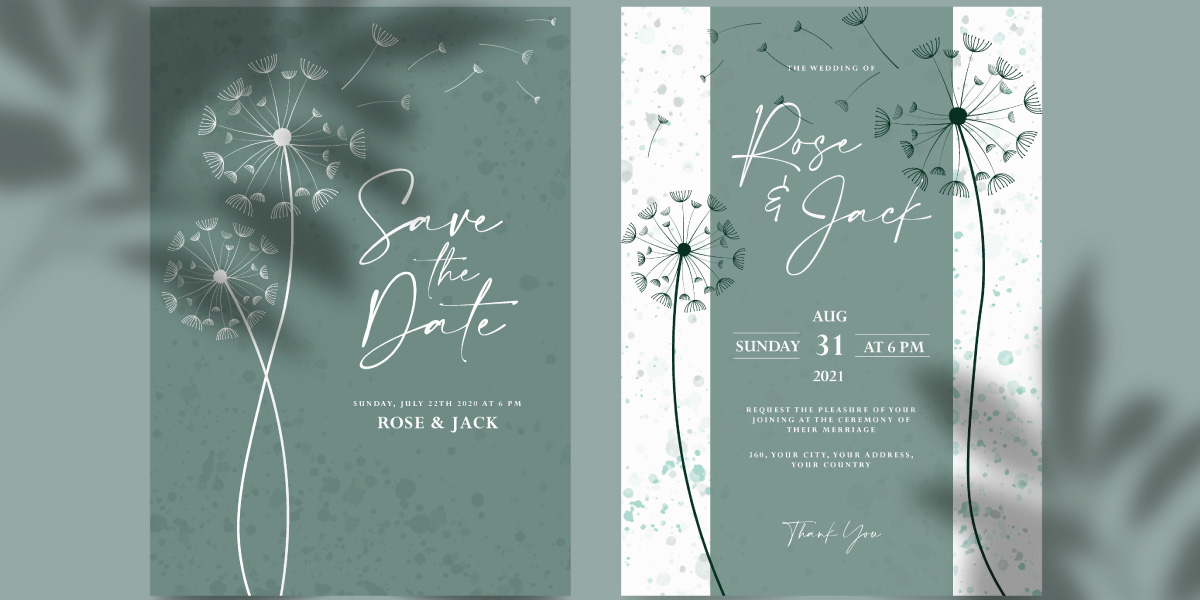
  1. Save the Dates

Your save the date is often the first piece of wedding stationery your guests will see. It should include the essential information:

  • Your names
  • The wedding date
  • The location or general area
  • A note telling guests that a formal invitation will follow

Save the dates can be simple, elegant or highly creative. If you want to make a strong first impression, consider foil printing, embossed details or a specialist paper stock.

  1. Wedding Invitations

Your wedding invitation is arguably the most important piece of your wedding stationery. It needs to provide all the information your guests need, including:

  • Wedding date
  • Ceremony time
  • Venue
  • Reception details
  • RSVP information
  • Dress code
  • Accommodation information, where relevant

You may also want to include additional invitation inserts covering directions, accommodation, transport, your wedding website or other useful information. For a luxury finish, hot foil wedding invitations are particularly popular. Gold, silver, copper and coloured foils can add a beautiful metallic detail, while embossing can give your invitations a tactile, three-dimensional finish.

  1. RSVP Cards

If you are asking guests to formally confirm their attendance, an RSVP card can be included with the invitation. Remember to allow space for:

  • Guest names
  • Attendance confirmation
  • Meal choices
  • Dietary requirements
  • Any other information you need

Including a pre-addressed envelope can also make it easier for guests to return their response.

  1. Order of Service

An order of service helps guests understand what is happening during your ceremony.

It might include:

  • The names of the couple
  • The wedding party
  • Ceremony timings
  • Readings
  • Hymns or music
  • Special acknowledgements
  • The order of the ceremony

This is another opportunity to bring your wedding design together through your choice of typography, paper and finishing.

  1. Wedding Menus

Printed wedding menus don’t just tell guests what they are eating they can also become part of the table styling. Menus can be personalised with each guest’s name or designed as a shared menu for the table. For a luxury wedding, consider combining a beautiful uncoated or textured paper with foil printing, embossing or die cutting.

  1. Place Cards

Place cards make it clear where each guest should sit and can also become a decorative part of your tablescape. They can be printed on a wide variety of papers and cut into different shapes to complement your wedding stationery. For something more memorable, consider foil-stamped place cards or embossed names.

  1. Table Numbers and Table Names

Whether you choose numbers, names, places or something completely personal, your table stationery should be easy for guests to see. Your table numbers or names can be designed to match your invitations and menus, creating a consistent look across your wedding.

  1. Seating Plan

A seating plan is particularly useful for larger weddings. It should be clear and easy to read, allowing guests to quickly find their table. A professionally printed seating plan can also become an important part of your wedding décor. From large-format printed boards to individual cards and beautifully finished paper, there are plenty of ways to make it part of the overall design.

  1. Wedding Signage

Wedding signage helps your guests find their way around the venue while adding personality to your day.

You might need signs for:

  • Welcome signs
  • Ceremony directions
  • Reception directions
  • Seating plans
  • Bar menus
  • Guest books
  • Gift tables
  • Photo booths
  • Wedding favours

Keep the design consistent with your invitations and other stationery so everything feels part of the same wedding.

  1. Wedding Favours and Tags

If you’re giving your guests a wedding favour, a small printed tag can add a personal finishing touch. Tags can include your names, wedding date, a short message or simply a thank you. Specialist die cutting and foil printing can turn a simple favour tag into something much more distinctive.

  1. Guest Books and Other Printed Details

There are plenty of smaller printed items that can easily be forgotten when planning your wedding stationery.

Depending on your wedding, you might also need:

  • Guest book cards
  • Advice cards
  • Thank you tags
  • Confetti cones
  • Drink tokens
  • Bar menus
  • Cocktail cards
  • Table plans
  • Wedding favour labels

You don’t necessarily need all of these the right stationery depends on your wedding and your venue.

  1. Thank You Cards

After the wedding, don’t forget your thank you cards. These are traditionally sent to guests who attended your wedding or gave you a gift. You could include a favourite photograph from your wedding day or continue the same design used throughout your wedding stationery.

Don’t Forget the Printing Details

Once you’ve decided what you need, there are a few practical things to consider before sending your artwork to print.

Check your quantities

Don’t order exactly the number of guests attending. It’s always sensible to allow for a few extras, particularly with invitations, menus and place cards.

Check your artwork carefully

Proofread names, dates, addresses, timings and dietary information carefully before approving your artwork. Once something has been printed, mistakes can be expensive to correct.

Think about your paper

Your choice of paper can completely change the look and feel of your wedding stationery. At Dynamic Print, we work with a wide range of premium and specialist papers, including textured, recycled and environmentally considered stocks.

Consider finishing

If you’re looking for something more luxurious, think about whether hot foiling, embossing, debossing or die cutting could enhance your design. These processes add texture and dimension that you simply don’t get from standard digital printing.

When Should You Order Your Wedding Printing?

Don’t leave your wedding stationery until the last minute. Save the dates are generally sent well before the invitations, while invitations need to allow guests plenty of time to RSVP. On-the-day stationery such as menus, place cards and table plans can be finalised closer to the wedding once your guest numbers are confirmed. If you’re using specialist finishing such as foil blocking, embossing or die cutting, allow additional production time.

Your Wedding Printing Checklist

To make planning easier, here’s the complete list:

  •  Save the dates
  •  Wedding invitations
  •  RSVP cards
  •  Information cards
  •  Order of service
  •  Wedding menus
  •  Place cards
  •  Table numbers or names
  •  Seating plan
  •  Welcome signs and venue signage
  •  Wedding favour tags
  •  Guest book cards
  •  Bar or cocktail menus
  •  Confetti cones or tags
  •  Thank you cards

Beautiful Wedding Printing at Dynamic Print. Your wedding stationery should feel as special as the day itself. At Dynamic Print, we combine traditional printing craftsmanship with modern digital printing, specialising in techniques including hot foiling, embossing, debossing and die cutting. Whether you’re looking for elegant wedding invitations, luxurious foil stationery, beautifully embossed menus or a complete set of coordinated wedding printing, we’d love to help you create something memorable.

Planning your wedding stationery? Get in touch with Dynamic Print to discuss your ideas, papers, printing and finishing options.

Categories
Printing

What Size Should My Leaflet Be? A Guide to UK Leaflet Sizes

Choosing the right leaflet size is an important part of creating effective printed marketing. The size you choose can affect how much information you can include, how easy the leaflet is to handle and, ultimately, how your message is presented. At Dynamic Print in Norwich, Norfolk, we print leaflets in a wide range of sizes, formats and paper stocks, from simple promotional flyers to premium folded brochures and bespoke marketing pieces. So, what size should your leaflet be? For most promotional campaigns, A5 is one of the most popular leaflet sizes in the UK. However, A4, A6 and DL are also widely used, depending on the amount of information you need to communicate and how the leaflet will be distributed.

Popular Leaflet Sizes in the UK

A4 Leaflets – 210 × 297mm A4 is a good choice when you have a lot of information to communicate. It provides plenty of space for photographs, text, diagrams, product information or pricing and is often used for:

  • Company information
  • Product brochures
  • Menus
  • Event information
  • Detailed promotional material
  • Information sheets

A4 can also be folded to create smaller finished formats, making it a versatile option for printed marketing.

A5 Leaflets – 148 × 210mm A5 is one of the most popular choices for leaflet printing. It offers a good balance between space and portability, making it particularly effective for promotional campaigns, events, retail marketing and direct mail. A5 leaflets are commonly used for:

  • Business promotions
  • Events and exhibitions
  • Restaurant and takeaway promotions
  • Charity campaigns
  • Product launches
  • Local marketing
  • Wedding and event stationery

If you’re unsure what size leaflet to choose, A5 is often a good starting point.

A6 Leaflets – 105 × 148mm A6 is a compact format that works particularly well when you need a simple message that is quick to read. A6 leaflets are often used for:

  • Promotional offers
  • Postcards
  • Event promotions
  • Save the dates
  • Appointment cards
  • Small promotional campaigns

Because A6 is compact, it can also be an economical choice when you don’t need a large amount of space. DL Leaflets – 99 × 210mm DL is another very popular UK print size, particularly for mailshots and promotional material. Its long, narrow format makes it easy to handle and ideal for fitting inside a standard DL envelope. DL leaflets are often used for:

  • Direct mail
  • Menus
  • Price lists
  • Promotional offers
  • Event information
  • Business introductions

Which Leaflet Size Should I Choose?

The right size depends on what you want your leaflet to achieve.

Choose A4 if: you have a lot of information, photographs or products to showcase.

Choose A5 if: you want an effective all-round promotional leaflet with enough space for information without being too large.

Choose A6 if: you want something compact and easy to distribute.

Choose DL if: your leaflet is being mailed, inserted into an envelope or you prefer a long, narrow format.

There is no single “best” leaflet size. The right choice depends on your content, audience, distribution method and budget.

What About Folded Leaflets?

Your finished leaflet doesn’t have to be a single flat sheet. Folding can create additional panels and give your printed marketing a more structured and professional appearance. For example, an A4 sheet can be folded to create a smaller finished piece, while an A3 sheet can be folded down to A4. Common folding styles include:

  • Half fold
  • Tri-fold
  • Roll fold
  • Gate fold
  • Concertina fold

If you’re considering a folded leaflet, it is important to allow for the fold positions when preparing your artwork. At Dynamic Print, we can advise you on the most suitable finished size and folding method for your project.

What Is SRA Paper?

You may also come across SRA paper sizes when discussing your leaflet with a printer. SRA stands for Supplementary Raw Format. These sheets are slightly larger than the corresponding A-series sizes, giving the printer additional room for trimming and bleed. For example:

SRA3 – 320 × 450mm

This is a commonly used sheet size in professional printing and is particularly useful when producing smaller finished formats such as A4 and A5. The important thing to remember is that SRA is generally a printer’s sheet size rather than the finished size of your leaflet.

What Is Bleed and Why Does My Leaflet Need It?

If your design has colour, photographs or graphics running right to the edge of the leaflet, you will normally need to include bleed in your artwork. Bleed provides a small area beyond the finished trim size. This allows the printer to trim the sheet accurately without leaving unwanted white edges. For example, if you are designing an A5 leaflet, the finished size is 148 × 210mm, but your artwork will normally need to be supplied slightly larger to allow for trimming and bleed. If you’re unsure about preparing your artwork, speak to us before sending your files. Or check out our blog for sending files with bleed here.

A-Series Paper Sizes

The A-series is based on the international ISO 216 paper-size standard. Each size is approximately half the area of the previous size. Some of the most commonly used sizes are:

  • A0: 841 × 1189mm
  • A1: 594 × 841mm
  • A2: 420 × 594mm
  • A3: 297 × 420mm
  • A4: 210 × 297mm
  • A5: 148 × 210mm
  • A6: 105 × 148mm
  • A7: 74 × 105mm

For most everyday leaflet printing, A4, A5 and A6 are the sizes you’re most likely to consider.

Can My Leaflet Be a Bespoke Size?

Absolutely. Although standard sizes are popular because they are familiar and can be cost-effective to produce, there is no reason your printed marketing has to look like everyone else’s. At Dynamic Print, we can produce bespoke printed pieces using different paper stocks, finishes and traditional print techniques. For businesses looking for something more distinctive, options can include:

  • Premium papers
  • Hot foiling
  • Embossing
  • Blind debossing
  • Die cutting
  • Specialty and sustainable papers

A carefully chosen paper stock and finishing process can turn a simple leaflet into something that people want to keep rather than throw away.

What Paper Should I Use for My Leaflet?

The paper you choose is just as important as the size. A lightweight stock may be suitable for high-volume promotional distribution, while a heavier or more tactile paper can give a premium feel. At Dynamic Print, we also offer a range of unusual and sustainable paper stocks, including recycled and speciality papers, which can help businesses create printed marketing that reflects their brand values. If your leaflet is intended to make a strong impression, we can help you choose a paper and finishing combination that suits your design and budget.

Leaflet Printing in Norwich and Norfolk

Choosing the right leaflet size doesn’t need to be complicated. As an experienced print company in Norwich, Norfolk, Dynamic Print can help you choose the right size, paper, finish and production method for your project. Whether you need A4, A5, A6, DL, folded or bespoke leaflets, we can advise you on the most appropriate format before you commit to your artwork.

Need Help Choosing Your Leaflet Size?

If you’re unsure what size, paper or finish would work best for your project, give Dynamic Print a call on 01603 400040. We’re happy to talk through your requirements and help you find the right printed solution. Dynamic Print – professional leaflet printing in Norwich and Norfolk, with traditional craftsmanship and modern print technology.