Categories
Printing

Why you should stop using Peat NOW

Peatlands are precious which are home to rare and unusual plants, birds, and insects. Peat formation is made from decaying plants in soil that is waterlogged. The key component of peat is a moss called sphagnum, which forms multi coloured carpets across the landscape and breaks down very slowly under the waterlogged conditions.

For years many people did not understand the significance of Peat, so it was extracted for horticulture ( gardening and growing) but this is having a very negative impact on our whole eco system, and Scientists are encouraging us to stop using this precious soil.

Did you know from the end of 2024, peat compost sold in bags for us to use in our garden will be banned in England and in Wales.

So why should we all stop using Peat ?

Peatlands support a rare range of threatened species and cannot be found anywhere else in the world.

Our peatlands store more carbon than the whole of the forest of the UK France and Germany combined.

Peat is a preserver! The lack of Oxygen within peat slows down the process of decomposition.

When Peatlands are drained stored carbon is released into the atmosphere.

Sadly peatlands in the UK are amongst the most damaged in the world.

So what can we all do ?

Peat Free Purchasing – only ever purchase compost that is clearly labelled as “peat free”. If this is not visible on the bag of compost, then it is likely to contain peat.

Top Tips for gardening

Vegetable water is rich in nitrogen, why not try watering your plants with your leftover cooking water ?

Composts that contain wool are great for improving water retention.

An organic tomato feed can be used as a feed for both indoor and outdoor plants.

Why not recycled your teabags – tea is a great natural fertiliser, simply sprinkle the loose tea leaves around the base of your plants.

Don’t run water through your pots, this rinses away precious nutrients, try adding ice cubes and let them naturally melt slowly so no water runs out of the bottom.

Categories
Printing

Wedding Stand Stationery

Booking a stand at a wedding show or other exhibition is a great way to get your message across too many people. However, it is likely that the show will feature some of your competitors too. How do you make sure that your stand gets noticed?

The first impression the visitor gets is a hugely important one. Your stand needs to be visually stunning. Flowers are what you do, so your flowers must be perfect, of course. They need to be centre stage and impactful. Don’t rely on your folders with pictures of different bouquets and arrangements to get your message across. You need the real thing, in different styles: bright and vivid, cute and pretty, sustainable and natural.

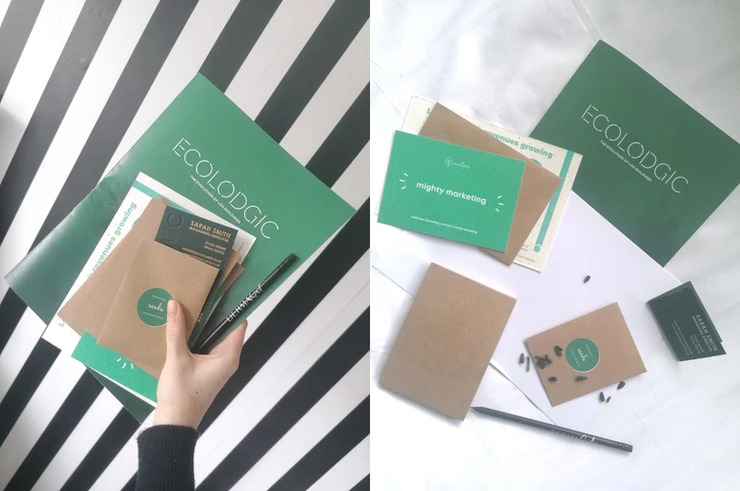
However, you will need to frame your stand to create a space that is all about you. Printed banners and pop-ups will create an instant backdrop and are low cost these days. Business cards, printed on recycled or even flower seeded paper that grows, can make a lasting impression. They can be sourced via your printer or graphic designer: use your unique business branding and imagery to set the tone.

You’ll also need somewhere to hold more detailed conversations with your potential customers once they’re engaged, so a small table and a few chairs is a good idea. Don’t go for the large rectangular tables usually offered by exhibition venues: they are too big and look impersonal. Better to have a small round folding table – a garden table, for example.

Having a beautiful stand is only the first step in winning business at a show. What you do is even more important: I’ve seen so many show stands fail because the people staffing the stand are too passive. Sitting behind a table waiting for people to approach you is never going to succeed. You need to get out there at the front or even in the aisles, with a friendly smile and an inviting opening greeting. Make eye contact with people: most will respond positively – they are there for a reason.

Your opening gambit is important. It might be the offer of a glass of fizz (but remember that many will be drivers so supply non-alcoholic alternatives) or the chance to win something they value – ten table posies or a corsage for the mother of the bride. Be relaxed and chatty with them. The last thing they want is full-on sales patter so let them talk about themselves at first. When they’re comfortable, ask them if they have thought about what their flowers should be like – and then you can draw them in to a more detailed conversation.

You’ll need to have things to give to them to take away – so handouts and perhaps freebies. Your handouts should be specific to the market you are tackling, so all about weddings for a wedding show. You may well do funeral flowers and gift bouquets but that’s not what’s on the mind of the people at the show and will dilute your message.

Handouts are important. The quality of the paper on which they are printed as well as the design and colours used will all combine to deliver a message about you and the service you provide. It doesn’t have to be a multi-page brochure but should reinforce what you are saying to them and signpost them to your other marketing channels such as your website or social media pages. Maybe think about flower/greenery crib sheets – colour groups, seasonality, home-grown or imported, etc, for them to take away and read.

Freebies don’t have to be expensive – they are just a gesture that helps to make you and your stand memorable. A single flower with your business card attached or mini cupcakes decorated with

flowers, or pads of post-it notes overprinted with your details – people love pads! Printed usable postcards, featuring your work, are a nice idea too.

Having a presence at a wedding show is expensive, of course. Not only do you have to pay for your pitch on the day, but you also need a whole range of marketing materials to create the image and messages that best promote your business. However, you should see these as an investment in your business – a necessary expense that when used

Categories
Printing

Art Nouveau and Art Deco Early 20th Century

There are so many distinctive design styles that you can use to make your project distinctive, whether in print or online. It can be difficult, however, to know exactly what style of design appeals to you personally, so we thought it would be useful to highlight two early 20th Century design styles: Art Nouveau and Art Deco.

Art Nouveau

Art Nouveau was the earlier of the two styles, appearing in the late 19th Century. It followed on from what was known as the Arts & Crafts Movement. Its key focus was the natural world, taking inspiration from plants and nature. The use of these natural elements was taken to a new level with long flowing lines, swirls and tendrils giving the shapes a stylised and interlocking look. Colours used were strong and vibrant, often with gold embellishments.

The characters depicted in Art Nouveau had soft lines, loose clothing, and flowing hair. Popular users of this style included Gustav Klimt and the Scottish artist Charles Mackintosh. This was also the era of Tiffany, who produced lamps and shades with colourful interlocking glass panels and designs.

The Art Nouveau movement lost popularity around 1910, as it began to be replaced by the new and very contrasting Art Deco era.

These days Art Nouveau designs are often used for invitations, greetings cards, gift wrap and many other decorative items. It provides an attractive basis for business design and print, with a soft-edged but boldly coloured style, making it particularly suitable for high-end products and services where luxury is the message to be conveyed.

Art Deco

Art Deco removed the natural influences of curves and embellishments and came from a world of straight lines, symmetry, geometric shapes, chrome, and steel. Shapes and forms were still exaggerated and elongated but used lines and crisp edges. This mirrored the new fashions of the time. The Great Gatsby movie summed up the style perfectly!

The Art Deco movement was all about being modern as the world accelerated. This was the time when futuristic machines like the car and aeroplane were taking over. However, the style also had classical influences such as Ancient Egypt.

By the 1940’s use of Art Deco was in decline for homes and fashion. However, in recent decades, it has made a strong comeback as a graphic design style, with a look that can now be described as timeless. Today many brands and printed projects incorporate elements of Art Deco due to its eye-catching style.

We find Art Deco is a hugely fashionable design style for invitations, programmes, and business events. The fonts are crisp yet decorative and the graphic elements are dramatic yet subtle. Use of Gold or Silver foil printing designs, especially on a dark background, are especially decadent and classically elegant ways to bring your project to life.

Categories
Envelopes Printing

A Comprehensive Guide to Envelopes

Do you know the difference between a pocket from your wallet? A banker from a straight-cut? Most people take their envelopes for granted but the choice of envelope can make a huge difference to the way that your communication is handled by the recipient.

Let’s look at some basic envelope facts…

Size and Weight

Envelopes come in all shapes and sizes. There are a number of standard sizes to accommodate A4 sheets of paper unfolded or folded into two or three, which are the most commonly used for business purposes. There’s a bit of wriggle room for you to insert your communication so they have a size description with a different prefix: C4 for an unfolded sheet, C5 for folded in half (so comfortably accommodating A5 sized inserts), and DL for an A4 sheet folded into three.

If you want your mailing to stand out from the crowd on someone’s doormat, that launch of a new product or a job you are applying for , you can use a bespoke envelope of whatever size or shape takes your fancy.

You can use a range of different paper or card stock for your envelopes. Paper and card stock is measured in grams per square meter (gsm) – the higher the ratio, the stiffer the paper or card will be and the greater protection it will offer to the contents.

Opening and Filling

Envelopes can have its opening either on its shortest side – known as a wallet – or its longest side – known as a pocket. It can be flat folded or, if additional capacity is needed, it can have gusseted sides. The shape of the flap to close your envelope can vary too: a “banker” has a V-shaped flap often used for invitations and greetings cards, or it can have a straight-cut flap, most often used for business correspondence.

Sealing

The flap of your envelope can be gummed, so you have to moisten the glue strip for it to stick, or be set up to seal itself either by a self-seal strip that binds on contact, or by a “peel and seal” strip where a tape is pulled back to reveal a sticky strip.

Making Your Envelopes Unique

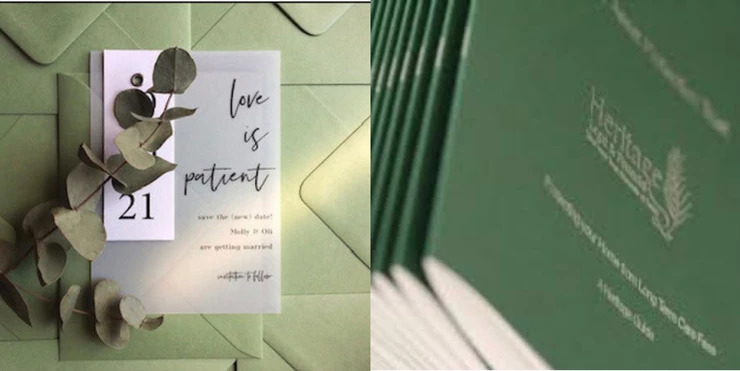
· Colour: a coloured envelope will stand out from all the other mail received in a delivery and will pique the interest of the recipient.

· Paper quality and texture: the weight and texture of the paper or card used for your envelope will give an impression of the importance of the message it contains.

· Overprinting: your envelope is your first opportunity to start to build brand awareness with your colours and logo, and to deliver key messages.

· Embossing and/or foiling: these specialist haptic treatments turn your simple mail delivery container into a Rolls Royce… They are perfect for envelopes to send out your invitations or for marketing communications aimed at high net worth individuals.

Direct mailing can be seen as an expensive process, but it remains an important part of the marketing mix for many businesses – particularly those offering high-end goods and services. It’s vital to ensure that your envelope both enhances your message and improves the chance of it being read by the intended recipient.

Categories
Printing

The Language of Paper

We all know about the language and messages that flowers can bring: roses for love, lilies for sorrow, sunflowers for optimism and so on. The florist’s art is demonstrated by combining the colours, fragrances and textures to deliver a complex message of thoughtfulness and care from the giver to the recipient.

However, a bouquet or floral gift comprises more than the arrangement of beautiful flowers and foliage. Packaging and presentation are enormously important too. In this age of online gift flowers from Amazon, M&S and others, hands-on florists need to ensure that their offering shouts quality and individualism from the moment it is received.

The fact is that those who give and receive flowers usually care about the natural environment. The sustainability and mileage of the flowers in the bouquet will matter to most people. This gives the florist a unique opportunity to promote their services on an eco-platform. Using environmentally sustainable packaging and presentation products may provide the USP needed to differentiate the florist shop from the online magnates.

Paper and card have their own language and are as important to enhance beautiful flowers as eucalyptus or ivy. There’s a huge range of paper-based products that can be used. Boxes for arrangements are now commonplace for presenting an arrangement: the quality and texture of your card and the colours you use will become an integral part of the message being conveyed and set the tone of the arrangement: modern, rustic, classic or natural.

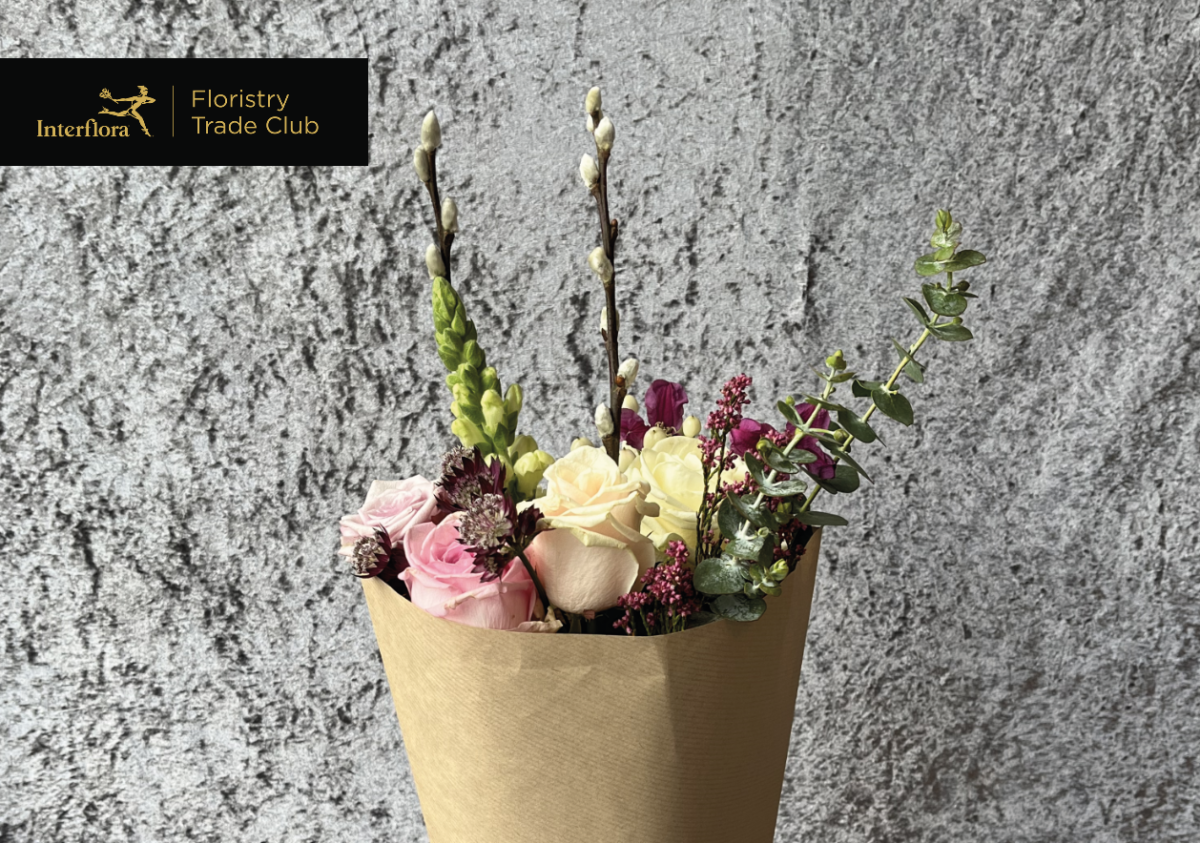
Eco Paper Flower Sleeves are a relatively new addition to the florist’s toolkit. Eco Flower Supplies are a part of Dynamic Print: we’ve been offering paper sleeves since 2018. They are made from UK-sourced die cut 90gsm Kraft paper which is recyclable, biodegradable and compostable – and they have a natural, soft look that can enhance any style of arrangement.

The important message here is that packaging and presentation should never be an afterthought for any business. In the world of floristry eco-friendly presentation products can set the independent apart from the heavyweight brands, build reputations and get the markets talking.

https://www.ecoflowersupplies.co.uk/

Categories
Printing

Is Quality Printing Important in a Digital Age?

There is a perception that printing is dead… No-one sends letters, no-one has brochures – everything is online or in a pdf. But is that really the case for successful businesses?

The trouble with digital correspondence and marketing is that it is transitory. It lacks the permanence of something tangible that you hold in your hand, and there is a real risk that your important message will fail to make the desired impression.

Don’t get me wrong. I’m not advocating going back to snail-mail for ongoing written conversations. Email, WhatsApp and other digital platforms make our interactions fast and easy. They’re more formal than a phone call and provide the short-term record needed to move projects and processes forward. I’m not suggesting waiting for a choice of brochures to arrive by post before making purchasing decisions either: instant, easy information is what the Internet and digital communication is designed to deliver.

However, there are times when nothing can come close to the impact and message that a paper brochure or communication can provide. Its ability to make an impression on other senses simultaneously gives it an enormous marketing edge over its digital counterpart. Its message is not just visual, but also has undertones delivered through touch and smell. An emailed invitation inevitably has a casual, perhaps mass-market feel to it however nicely designed it may be, whereas a beautifully embossed or foil printed invitation card shouts the importance of the recipient and the perceived value of the occasion.

Consider the humble business card… It’s one of the first impressions a customer gets about you and all too often it fails to meet its potential in terms of message and impact. A well-designed card, beautifully printed on the right card stock will always say that you care about detail and quality.

There’s something rather wonderful about the feel of good traditional paper and card, about the depth or subtlety of colours available, and about the sensory impact of embossing, foiling and all the other haptic finishes on offer.

The other factor that will impact on the future of printed materials is the brain’s ability to hold information for more than a few seconds. Studies suggest that the reader will retain more of the message they have read in print than they have read on screen. Part of that is related to the spatial awareness we get from physical reading matter – the layout on the page and the position in the publication – and part may be inbuilt perceptions that somehow the printed page is more important. Whatever the reasons, the consensus appears to be that the printed word stays with the reader longer.

The print market has certainly changed over the last decade, but it absolutely isn’t less important. Specialist printing for important communications – whether on tissue paper, heavy card or anything in between – plays a fundamental role in delivering specific messages that require maximum impact and longevity.

Categories
Printing

A visit from National Geographic

In 2022, we were proud to be featured on the National Geographic website! Below is a snippet of our featured post:

NORWICH, England—“A big thorn bush and a load of brick rubble,” says Sarah Smith, recalling the pre-pandemic state of her printing company’s yard on the outskirts of this medieval east England city.

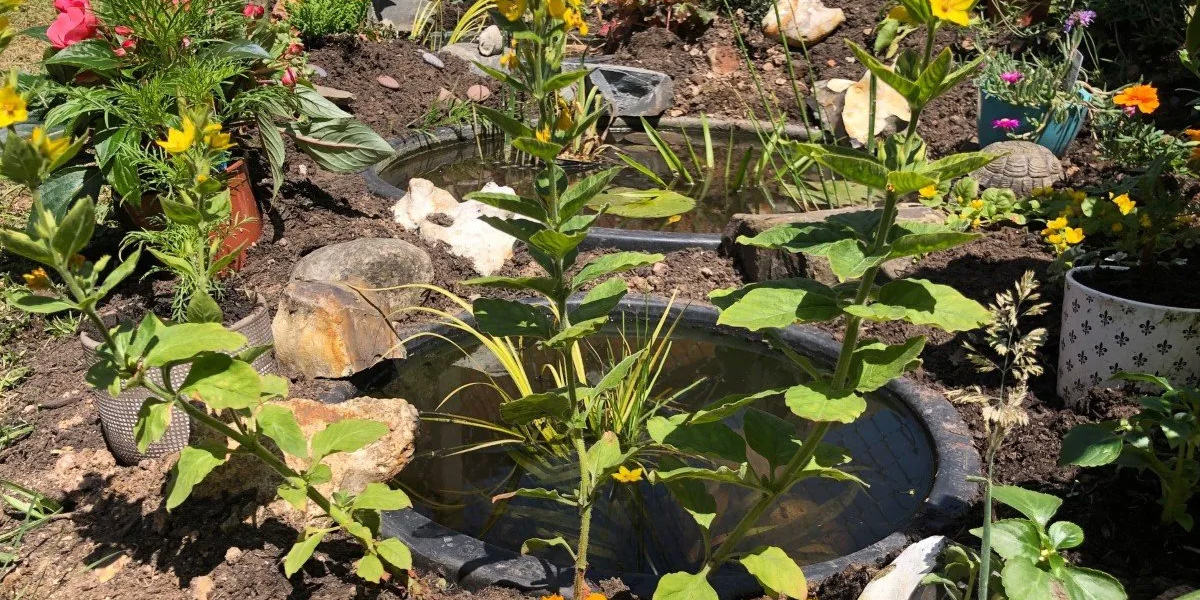
A couple of years on, it has been transformed into a miniature mosaic of wildflowers, grasses, lavender, and poppies. There are ponds, a rock garden, a vegetable patch, herbs, and a little compost heap decomposing merrily in the sun. Birdsong battles with the thrum of the refrigeration unit at the meat wholesaler next door, bees stock up on nectar as they pass by the warehouses, and field mice scurry through the chain link fence in search of shade, seeds, and insects. It is messy and bursting with life.

WildEast, a nonprofit encouraging people to let 20 percent of whatever they have grow wilder, whether by creating a pond for wildlife in the backyard, letting churchyard grasses grow long, or turning acreage on private estates back to nature…

Read the full article here.

Categories
Printing

Three Best Rated Printer 5th year in a row

Three best rated (uk) was created back in 2014 with a simple goal to find the top 3 tradesmen such as professionals, restaurants, health care providers etc in key towns/cities. They simply check the top 3 companies, by checking reviews, reputation, history, trust etc using a 50-point inspection system which uses indicators to pinpoint the best of the best.

Three best rated use 50% algorithm ( by running a computer programme ) and 50% human employees to help mark each company with a score. First the algorithm will run its magic and create a score, then their employees will meticulously go through every category to ensure that the algorithm was accurate.

Here are some of the categories that are scored and looked at.

History, how long has Dynamic Print been trading for ?

Exact services – are we clear with what we are offering ?

Do we have a good reputation ? Have we got clear images to show case our pdrocuts ?

Social Media – do we have a social media presence

Website – is this regularly updated with blogs and photos – does it have sub-categories showing relevant information of products

Awards – have we had any endoresements and honors.

Finally Complaint handling – of course very now and again you will get a complaint about a business but it is how you resolved that matters.

Categories
Printing

Eco Friendly Signage Materials

We have been making some big changes at Dynamic print over the past 4 1/2 years in the effort to offset our carbon omissions and reduce our waste ..

We have done this in several ways by making sure we are looking at every way that we can either upcycle, recycle, freecycle any of our waste and we are actively changing to environmentally friendly products to reduce the amount of plastic we use as a business.

One of the biggest changes we have seen at Dynamic Print is that we have switched too offering our customers when it comes to their signage, a new PVC free board called Triaprint.

We offered a product called Foamex board in the past, but now we offer a product called Triaprint… It is a fully recyclable board, lightweight but sturdy enough to stand, 100% polypropylene board and 100% recyclable ideal for outside and inside use. Triaprint is an extruded polypropylene sheet consisting of 3 layers which are 100% recyclable. The central layer is a cell structured core and the outer layers are smooth and perfect for digital and screen printing.

What can Triaprint be used for ? Eco friendly signage ..

Triaprint can be used for Wedding Welcome signs, seating plans, POS and display stands, indoor and outdoor signage and of course used at any exhibition.

We give this product a full 5 star review

Categories
Printing

Norwich Puppets benefits from Paper waste

We were recently featured on the BBC News website! We were the first company to work with the Norwich BID to supply our waste paper products to a local theatre who create puppets & Scenery for their shows.

If you’d like the read the full article, head on over here to the BBCs website